




Wedding Planning Guide from a Top Burlington VT Florist
15th Oct 2025
Let’s make your flowers do more than sit pretty; they should steer the room, flatter the light, and survive a brisk lake breeze. We’re Chappell’s Florist, a local business and trusted wedding florist in Burlington, VT, and we excel in designing pieces shaped by your venue and ideas so they photograph cleanly and feel like you.
This guide explains the choices you’ll face and the info we need, so planning stays calm and collaborative.
Budget, Scale, and Trade-Offs
Every couple has a vision. Our role as your Vermont wedding florist is to show where your investment makes the most visual impact. The main cost drivers are guest count, table count, stem selection, installations, labor, and delivery logistics. Each of these shapes the scale and complexity of your wedding flowers, from ceremony focal points to reception arrangements.
You can adjust more than you think. We’ll guide you through levers like:
- Scale: Smaller centerpieces or fewer tables can free resources for one standout floral moment.
- Flower mix: Balance premium blooms, such as peonies or zinnias, with hardy, locally grown flowers that bring value.
- Rentals vs. owned items: Reusing vases, candles, or stands keeps the look cohesive without extra spending.
- Impact zones: Prioritize where guests and cameras spend the most time—your ceremony, head table, or bar—so design elements feel intentional, not diluted.
Budget conversations don’t have to be awkward. They’re where creativity lives. A transparent discussion with your florist ensures each stem supports your atmosphere and story.
Vision to Palette
To keep planning calm, share 3–5 images, a few mood words, and any hard-no colors so we have an idea of the design you want to achieve.
Anchor bloom vs. supporting cast
Pick one hero—peonies, dahlias, or another favorite—and let us surround it with a supporting mix so textures, shapes, and scale stay balanced. Anchors carry the story; supporting flowers and greenery make stunning arrangements feel full without ballooning spend.
Color temperature
Warm palettes (butter, apricot, rust) read cozy; cool palettes (ivy, slate, lilac) feel crisp. If your images mix both, tell us which direction you prefer.
Light shifts everything
Photos at noon flatten color; evening light deepens tones. Indoor spaces can skew cool or warm, depending on walls and bulbs. Share your ceremony time and any key photo moments so we can elevate the palette to match the light, not fight it.
Practical add-ons
A short note on bouquets you love, any floral designs you don’t, and your comfort zone for fragrance helps us shape beautiful flowers that fit your space and timeline. From there, we translate vision into a right-sized plan that is ready to evolve as details firm up.
Seasonality in Vermont (Peaks & Smart Swaps)
Season drives look, longevity, and value. Leaning into what’s naturally abundant keeps designs elegant and resilient, then we backfill with reliable imports if a variety runs short.
Early spring to late spring
- Often abundant: tulips, narcissus, ranunculus, anemones, flowering branches.
- Smart swaps: garden roses or lisianthus for ranunculus; textured greenery for branch height.
Early summer
- Often abundant: peonies, sweet peas, foxglove, delphinium.
- Smart swaps: when peonies taper, pivot to garden roses or double tulips to keep that plush feel.
High summer
- Often abundant: zinnias, cosmos, snapdragons, rudbeckia, sunflowers, herbs.
- Smart swaps: bolster with roses, mums, and sturdy foliage during heat waves.
Late summer to fall
- Often abundant: dahlias, amaranthus, asters, ornamental grasses, heirloom mums.
- Smart swaps: chrysanthemums, scabiosa, or rose varieties to mimic dahlia depth and movement.
Winter
- Often abundant: evergreens, cedar, pine, ilex, hellebores, amaryllis.
- Smart swaps: structured greens and berry textures for shape without heavy scent.
Why local stems help: Shorter travel means fresher blooms and better vase life, especially across long reception timelines. Local fields also bring distinctive textures (think specialty dahlias and farm zinnias) that make floral designs feel of-place in Burlington, Vermont, while keeping the overall flower order grounded in quality and consistency.
Venue & Layout Basics (Questions to Ask Early)
Great floral design starts with a clear picture of the room. We need a few practical details so our floral artistry fits the space and your timeline.
Ask your venue:
- Room names & capacities: Which spaces are in play for ceremony, cocktail hour, and dinner?
- Approximate layout: Round or farm tables, expected table count range.
- Candle policy: Open flame allowed, hurricanes required, or LEDs only.
- Access guidance: Load-in location, elevator use, earliest setup time, and when breakdown can begin.
- On-site rules: Ladder/rigging permissions, tape/command hooks policy, and any decor restrictions.
- Power & climate notes: Outlet locations for lighting and typical temperature swings.
Share with us:
- A simple floor plan or sketch with table sizes, head table shape, and focal areas you care about.
- Ceiling height and any features worth highlighting (beams, fireplace, staircase).
- Photo priorities: Where portraits or details are likely staged, so we can keep those zones clean.
- Service flow: Buffet vs. plated, bar locations, and pathways need to be clear.
What we consider as we design:
- Ceiling height & scale: How tall a focal point can be without crowding the room.
- Sightlines: Keeping speakers, toasts, and views unobstructed while still creating impact.
- Guest flow: Entrances, aisles, and high-traffic areas that need low-profile pieces.
- Safety & stability: Weighted mechanics, secure placements, and flame clearance when candles are part of the look.
Bring these notes to your consultation, and we’ll translate them into beautiful arrangements that feel intentional—balanced proportions, smart placement, and a layout that works for the whole wedding day.
Personals That Photograph Well and Travel Well
Personals move through hugs, photos, and weather, so they need to be beautiful, durable, and comfortable.
Counts you’ll likely need
- Bouquets: one for each partner, plus attendants as desired.
- Boutonnieres: for suits or jackets you want identified in photos (partners, attendants, parents, and officiant as you prefer).
- Corsages or floral accents: wrist or pin-on for honored family; pocket squares or petite posies if pins aren’t your style.
Photo-ready tips
- A consistent ribbon tone keeps the group cohesive in detail shots.
- Labeling by name/role prevents mix-ups and speeds the handoff.
- Light hydration guidance helps pieces arrive fresh without turning prep into a chore.
Comfort & fit
- Handle styles: wrapped, bare stems, or modern grips. Choose what feels good in-hand for the length of the shoot.
- Scale: we balance bouquet size to dress/suit lines so pieces complement, not compete.
Ceremony Focus Without the Fuss
A strong focal anchors the moment, frames the vows, and guides every camera angle. We keep shapes clean and mechanics discreet so the scene feels natural.
Focal options, scaled to the space
- Arched or asymmetric frame: Great for structured backdrops or tall ceilings. We tune height and negative space so it complements, not overwhelms.
- Grounded meadows: Low, textural groupings that read beautifully in photos and stay stable in breeze-prone spots. Ideal for gardens, barns, and intimate rooms.
- Columns or plinths: Easy placement on uneven ground and strong lines for aisle-to-altar continuity.
- Aisle accents: Clusters at row ends or entry points that guide guests without narrowing pathways. Candles or lanterns can layer glow without visual clutter.
Repurposing—smart when it serves the flow
- Works well when pieces are modular (columns, grounded arrangements) and the reception is nearby with a clear path and time to move them.
- Skip it when installations are fixed, fragile, or the move would interrupt service or photos.
Practical notes
- Keep the aisle clear for movement and accessibility.
- Match the focal scale to the guest count and room depth so the couple remains the visual center.
This approach keeps the ceremony calm and intentional—impact where it matters, no fuss where it doesn’t, so your special day feels effortless from first step down the aisle to the final kiss.
Reception Impact: Where Eyes Go First
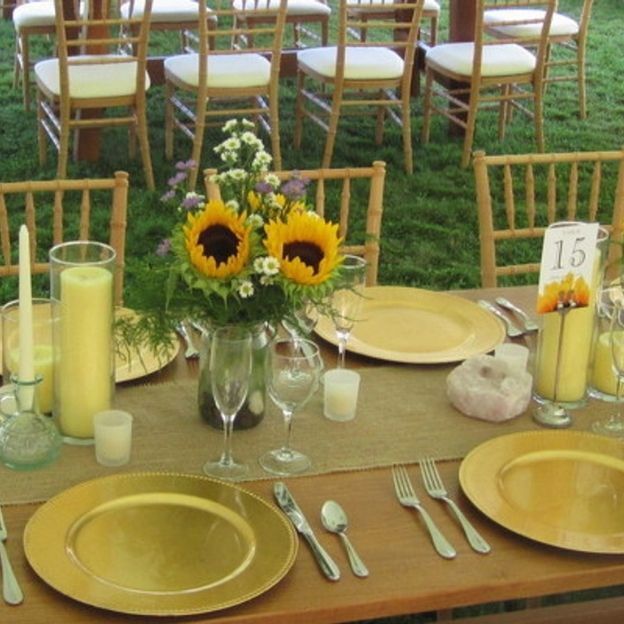
Reception rooms are busy. We focus attention where guests and cameras linger, then keep surfaces clear so service flows.
Tablescape tiers
- Low: Conversation-friendly bowls or compotes with airy volume—great for dense table counts.
- Mixed: A blend of low pieces with a few taller moments creates rhythm without blocking sightlines.
- Tall: Slim, elevated designs lift color above eye level and free space around place settings.
Focal points beyond the tables
- Bar & backdrops: One strong statement does more than many small pieces—think a clean bar focal, cake table accent, or photo nook.
- Entrances & transitions: Small clusters at doors or escort displays guide traffic and frame key moments.
- Simple candlelight that works
- Keep it cohesive: one vessel family (all glass, or all ceramic) reads intentional.
- Vary heights lightly for depth, and follow venue rules on open flame vs. enclosed glass.
- Use candles to bridge gaps between centerpieces instead of crowding every surface.
Place settings vs. centerpiece load
- Leave elbow room for glassware and platters; we size arrangements to the table width, not the Pinterest close-up.
- If chargers, menus, or favors are part of the look, we scale florals so the table still feels generous, not cluttered.
- For family-style service, we map centerpiece footprints and add petite accents at the head table where space is freer.
This approach puts impact where it’s noticed first—and keeps everything else streamlined for an easy, celebratory flow.
Logistics, Light, and Timing (The Stress Reducers)
A steady process keeps the day calm. Here’s how we structure decisions.
Milestones most couples set
- Inquiry to fit check: You share date, venue, guest count range, and a few images; we confirm availability and general scope.
- Proposal to review: You receive an itemized outline.
- Deposit to date hold: Secures our team and rental inventory.
- Design lock: Palette, focal types, and estimated counts are confirmed; fine-tunes stay open for practical changes.
- Week-of confirmations: Final counts, placement map, and contact list are checked in one message so everyone’s aligned.
Delivery windows & handoff basics
- Windows are ranges.
- Personals first, then ceremony pieces, then reception elements as access allows.
- Each item is labeled by name/role or location for a clean handoff to your planner or point person.
- Contact chain—who approves what, and when
- You (or designated approver): scope edits, palette shifts, final counts.
- Planner/venue contact: access notes, placement confirmations.
If plans pivot, you’ll know exactly who to text and what decision they’re authorized to make.
Week-Of Checklist
A light lift with big payoff. Share these in one message the week of your wedding so everyone’s aligned.
Essentials to send
- Final guest count range and expected table count.
- Name-by-name personals list (who gets what, spelled correctly).
- Placement map for ceremony, cocktail, and reception focal areas.
- Access notes we should know: earliest setup time, load-in door, room names, and any decor rules.
- Primary day-of-contact (text-friendly) plus a backup if they’re in photos.
Nice-to-have (if available)
- Final vendor list with planner, venue, and photo contacts.
- Any layout tweaks since the proposal (table shapes, dance floor, bar).
Send what you have. Perfect is optional. We’ll translate this into a calm, clear run of show so flowers arrive labeled, placed, and photo-ready.
Quick Reference: Good Signs vs. Red Flags
You shouldn’t need a decoder ring to hire a florist. Use this fast scan to gauge fit and protect your timeline.
Good signs (green lights)
- Clear scope: itemized pieces with quantities and size notes, plus what’s rental vs. return.
- Substitutions policy: guarantees on palette/shape with named alternates and quality standards.
- Delivery & strike defined: time windows, staging locations, and who signs off on placements.
- Reachable contacts: a day-of lead, response-time expectations, and how to escalate if needed.
- Documented revisions: how many edit rounds, what counts as a scope change, and when design locks.
Red flags (tap the brakes)
- Vague pricing: “centerpieces TBD,” no labor or delivery lines, or round numbers with no detail.
- No written plan: promises by phone only; nothing summarized after meetings.
- Replica guarantees: “exact flowers, no swaps” regardless of season or quality on arrival.
- Rigid timing: a single drop-off minute with no window or backup plan.
- Pressure tactics: “approve today or lose your date” without a reasonable review window.
If something feels fuzzy, ask for one clarifying line in writing. A professional team will welcome the question and tighten the plan.
Ready When You Are
You don’t need a 40-page brief—just a clear next step. Sit down with us for one focused consult and leave with a workable plan, not a wish list.
In one consult, we’ll discuss and:
- Map a right-sized design for your venue and guest count—no filler, all impact.
- Outline a transparent range for product, labor, and delivery so pricing makes sense.
- Note season-smart swaps that protect palette and shape if a stem runs short.
- Set delivery windows and a simple contact chain, so day-of approvals are easy.
Message us to book your consultation or call 802-658-4733. Prefer to pop in? Visit us at 1437 Williston Road, South Burlington. We’ll turn your ideas into a calm, camera-ready plan, and keep it moving from the first email to the last candle out.
Frequently Asked Questions
How do you price wedding flowers in Burlington, Vermont, and what affects the total?
We price by scope: guest/table counts, focal installs, stem mix, labor, and delivery. Share your comfort range, and we’ll right-size the plan so it lands best where guests and cameras linger.
What should we expect from a Vermont wedding florist during planning and the week of?
You’ll get a clear proposal with palette, placements, substitutions language, and delivery windows, plus a point person for day-of decisions. We confirm counts and a simple contact chain so approvals stay quick and calm.
What does floral artistry look like across seasons, and how do you keep beautiful flowers photo-ready?
We lean into seasonal strengths, then backfill with dependable stems to protect palette and shape. Hydration, secure mechanics, and smart timing keep everything fresh from first look to last toast.
Can you customize floral designs to fit our venue and timeline?
Yes, our process starts with layout, lighting, and flow, then we scale pieces so tables, bars, and focal areas feel intentional. You’ll see options at different tiers, all tailored to your space and schedule.